

Le Centre de vaccination AES is now part of the PRELEV Group.
Vaccination: Myths and Realities

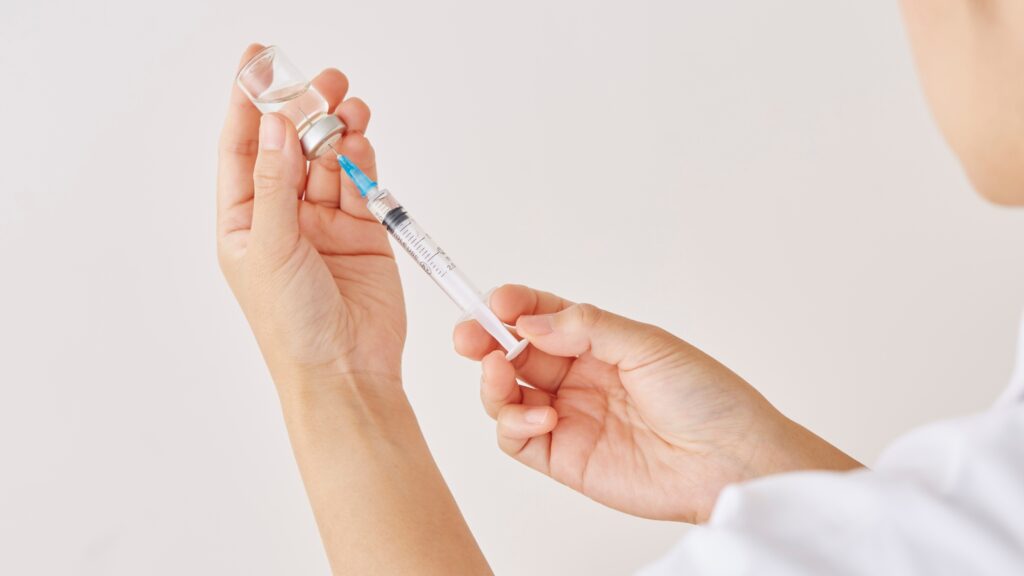
nurse with a vial for vaccination - myths and realities blog

Vaccination plays a crucial role in preventing many diseases and infections. Vaccines used in Canada are rigorously evaluated and approved by Health Canada, ensuring their high safety. Despite this, some people still express concerns about their potential effects on the body. In this blog post, we will clarify several misconceptions and distinguish myths from realities surrounding vaccination.

Myth #1

The diseases against which vaccines are administered are generally mild.

Reality:
Diseases targeted by pediatric vaccines can be very serious when contracted. They can lead to significant complications, and even death, even when treatment is available. Vaccination therefore remains an essential measure to protect children’s health. Whooping cough causes death in several babies each year in Canada. From 2005 to 2019, Statistics Canada reported 17 deaths caused by whooping cough among the leading causes of death, with zero to three deaths reported per year. All 17 deaths occurred in infants under one year of age. (1)
Myth #2

My child doesn't need a vaccine, since these diseases have disappeared.

Reality:

Even if they are much less common today, these diseases still exist. Vaccination programs have significantly reduced their presence in Canada, but a drop in vaccination rates can lead to their resurgence.

Furthermore, many of these vaccine-preventable diseases still circulate in other parts of the world. With the increase in international travel and immigration, the risk of importing these infections remains very real. The recent rise in measles cases in Canada clearly illustrates this possibility. In 1998, Canada successfully eliminated measles thanks to its routine vaccination programs. This means that endemic transmission no longer occurs and that most cases and outbreaks originate outside Canada, with limited domestic spread. Canada continued to show low measles activity until 2024. In 2025, Canada lost its measles elimination status due to sustained transmission of the measles virus strain associated with the multi-jurisdictional outbreak for more than one year. During the period when measles was eliminated in Canada (1998 to 2024), an average of 91 measles cases were reported each year, with the number of cases ranging from 0 to 752 per year. In 2025, 5,463 cases were reported. (2)
Myth #3

It's better to receive only one vaccine at a time.

Reality:

So-called combined vaccines allow children to be protected against several diseases with a single injection. For example, Twinrix (hepatitis A and B) and the MMR vaccine (measles, mumps, rubella) combine multiple protections in a single vaccine. Research shows that these vaccines are both safe and effective.

Furthermore, studies clearly show that the immune system is not “overloaded” when it receives several inactivated vaccines at the same time. On the contrary, vaccination stimulates and strengthens the body’s natural defenses. This is why many people prefer to receive several vaccines during a single appointment rather than having to return multiple times.

Myth #4

The MMR vaccine (measles, mumps, and rubella) causes autism.

Reality:

This vaccine is not responsible for autism. No scientific data has been able to support this claim. Signs of autism can appear around the same age as the period when this vaccine is administered, which leads some people to believe there is a link between it and autism.

According to several websites, much of the controversy surrounding the MMR vaccine and autism stems from a single article published in 1998 that suggested a link between the vaccine and autism. They discovered that this report was fraudulent and was removed from the internet. Numerous scientific studies worldwide have found no link between the MMR vaccine and autism.

Myth #5

The MMR vaccine (measles, mumps, and rubella) causes autism.

Reality:
There is no evidence that thimerosal (a preservative formerly used in vaccines) is linked to autism or any other developmental disorder. Once in the body, thimerosal breaks down into a product called ethylmercury. The form of mercury that can cause severe brain and nerve damage, if consumed in large quantities, is called methylmercury. Unlike methylmercury, ethylmercury is rapidly eliminated from the body and is unlikely to accumulate. (3)
Myth #6

A healthy diet, homeopathy, or breastfeeding can replace vaccination.

Reality:

Nothing can replace vaccination, except contracting the disease itself — which obviously carries significant risks. Only the vaccine stimulates the production of specific antibodies against the virus or bacteria responsible for a given infection.

A balanced diet helps support the immune system, but it cannot prevent infectious diseases. Breastfeeding offers some protection against a few common infections, such as the common cold or ear infections. However, this protection remains partial and temporary, and in no way replaces the lasting immunity provided by vaccination.

Myth #7

I just have to catch the disease instead of getting vaccinated.

Reality:
Contracting the disease will necessarily be more dangerous than vaccination. Serious side effects related to vaccination are very rare, whereas the disease can cause serious complications and even death. Also, some diseases can be caused by different types of microbes (strains). As a result, when you catch a disease, you only contract one of its strains at a time. Natural protection is therefore only valid for that strain. Some vaccines have the advantage of protecting against multiple strains of a disease. (3)
Myth #8

Flu (influenza) vaccines also protect against COVID-19.

Reality:

Flu (influenza) vaccines only protect against influenza, while COVID-19 vaccines offer specific protection against the virus responsible for COVID-19. To be adequately protected against these two distinct diseases, it is therefore important to receive each of these vaccines.

Myth #9

Flu (influenza) vaccines also protect against COVID-19.

Reality:

There is no evidence that vaccines can cause cancer. However, there are vaccines that can act in reverse, and thus protect against certain cancers, such as HPV (human papillomavirus).

Myth #10

Vaccines are not effective

Reality:
Vaccines are very effective. Thanks to vaccination programs, several diseases are now very rare and others have practically disappeared. For example, smallpox has been completely eradicated and measles is now very rare. However, vaccines are not always 100% effective. In such cases, some people may contract the disease against which they were vaccinated. However, one remains much more at risk of contracting a disease when not vaccinated against it. Vaccination remains the most effective way to prevent a disease. By being vaccinated, we reduce the risk of transmitting the disease to those around us, who may sometimes be more vulnerable than us. (4)
Myth #11

Vaccines have many side effects.

Reality:

Like any medication, vaccines can cause side effects. However, the most common ones include redness, pain or swelling at the injection site, and fever. More serious effects, such as anaphylaxis, remain very rare.

Myth #12

Vaccines are not safe during pregnancy.

Reality:
Some vaccines are not recommended during pregnancy. However, routine vaccines offered to pregnant individuals have been studied and are recognized as safe. For example, the Tdap vaccine (tetanus, diphtheria, pertussis) is recommended for all pregnant women with each pregnancy, ideally between the 26th and 32nd week of gestation. This safe vaccination allows antibodies to be transferred to the fetus, protecting it against whooping cough before it can be vaccinated.(5) Also, the Abrysvo vaccine is recommended for pregnant women between 32 and 36 weeks of gestation (third trimester) to protect the newborn against Respiratory Syncytial Virus (RSV). A single dose allows antibodies to be transmitted via the placenta, covering the baby from birth up to 6 months. (6)

Hesitant about vaccination?

We also invite you to watch the following video on vaccine hesitancy, to better understand some of the concepts discussed in this blog post.(7)

If you have questions or would like recommendations tailored to your situation, our team is here to assist you.

Book an appointment now.

Source Note
  1. Public Health Agency of Canada. (2023). Epidemiology of Pertussis in Canada, 2005–2019. Canada Communicable Disease Report, 49(1). https://www.canada.ca/fr/sante-publique/services/rapports-publications/releve-maladies-transmissibles-canada-rmtc/numero-mensuel/2023-49/numero-1-janvier-2023/epidemiologie-coqueluche-2005-2019.html
  2. Government of Canada. (n.d.). Measles and Rubella – Data and Surveillance. Health Infobase. https://sante-infobase.canada.ca/rougeole-rubeole/
  3. Government of Quebec. (n.d.). Demystifying beliefs about vaccination risks. https://www.quebec.ca/sante/conseils-et-prevention/vaccination/demystifier-les-croyances-sur-les-risques-de-la-vaccination
  4. Immunize Canada. (2021). COVID-19 myths vs facts [PDF]. https://www.immunize.ca/sites/default/files/Resource%20and%20Product%20Uploads%20(PDFs)/COVID-19/covid19_myths_factsheet_web_f.pdf
  5. Jean Coutu. (n.d.). Vaccination: myths and reality. https://www.jeancoutu.com/sante/conseils-sante/la-vaccination-mythes-et-realite/
  6. Ministry of Health and Social Services. (2018). Vaccination: myths and realities [PDF]. https://publications.msss.gouv.qc.ca/msss/fichiers/2018/18-278-03W.pdf
  7. Ministry of Health and Social Services. (2023). Vaccination: myths and realities [Video]. YouTube. https://www.youtube.com/watch?v=vxqqMwduayw
  8. Pfizer Canada. (n.d.). Abrysvo – Pregnancy. https://www.abrysvo.ca/fr/grossesse/
  9. Canadian Paediatric Society. (n.d.). Vaccines: myths and realities. Caring for Kids.

Share: